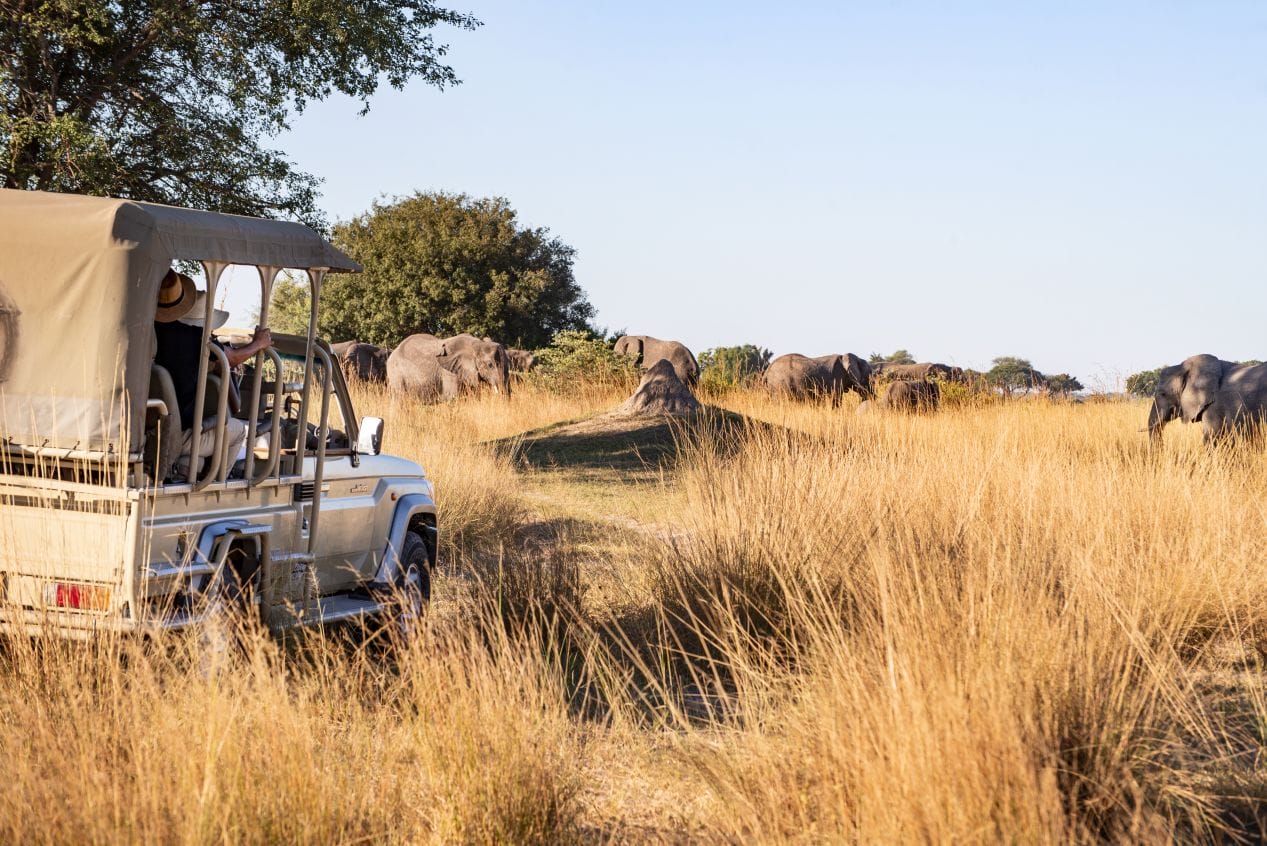
The Elephant Route is a self-drive route covering Zimbabwe, Namibia and Botswana, which can be tailored to suit your preferences.
The Kavango-Zambezi (Caprivi Strip) is a narrow piece of land belonging to Namibia and forming a natural corridor for elephants migrating from Botswana to Angola, Zambia and Zimbabwe.
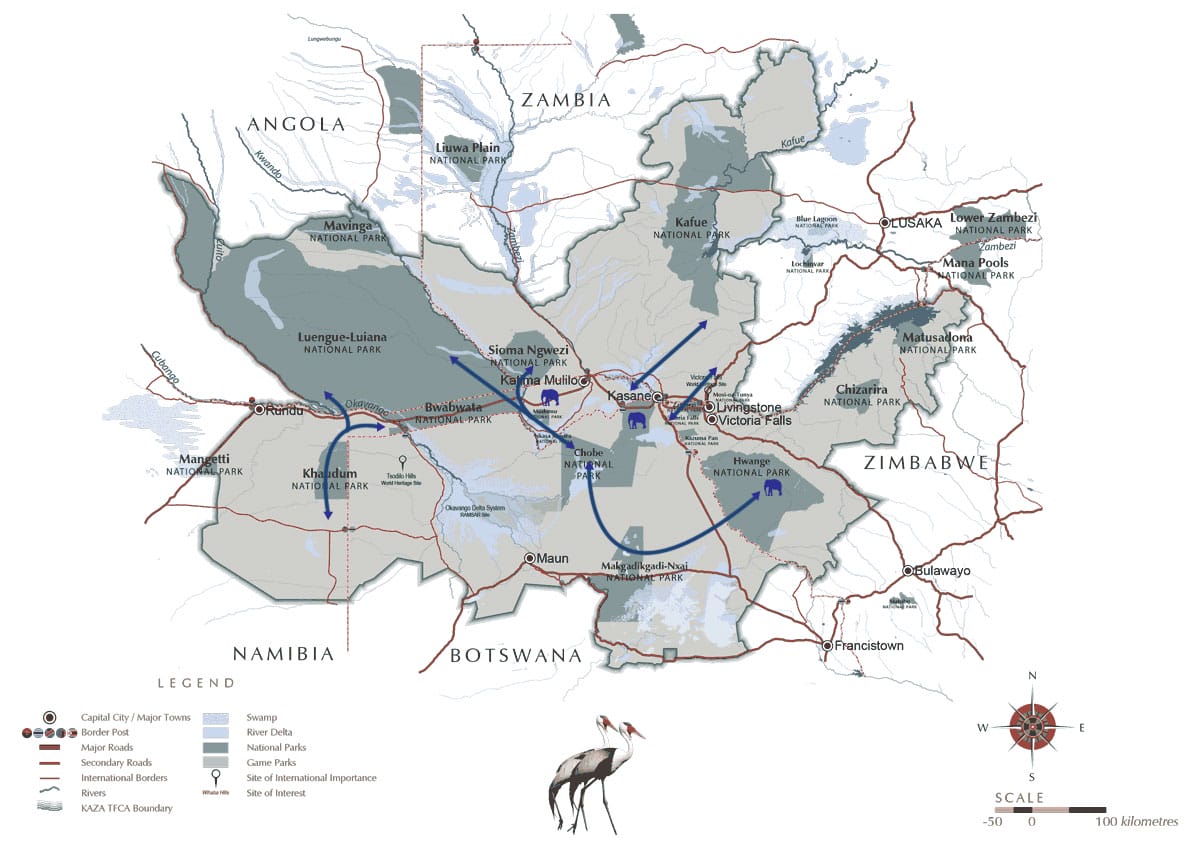
Elephant movement within the Kavango-Zambezi Transfrontier Conservation Area
Three national parks have been created and they all offer remarkable elephant viewing opportunities thanks to the Kwando river and the floodplains bordering it.
Also known as the Mashi river, the Kwando river originates in Angola where it is named Cuando. It’s 800 km long route ends at the east of Caprivi with the formation of the Linyanti marsh, another inner delta that is reminiscent of its big brother : the Okavango delta.
The marsh undergoes a spectacular seasonal transformation from a dry dusty environment in winter to a swamp that is sometimes impassable in summer. The permanent waters flowing through it are particularly attractive for large herds of elephants moving in the dry season from the Linyanti region of Botswana. The pachyderm density reaches its peak during the months of July, August and September.
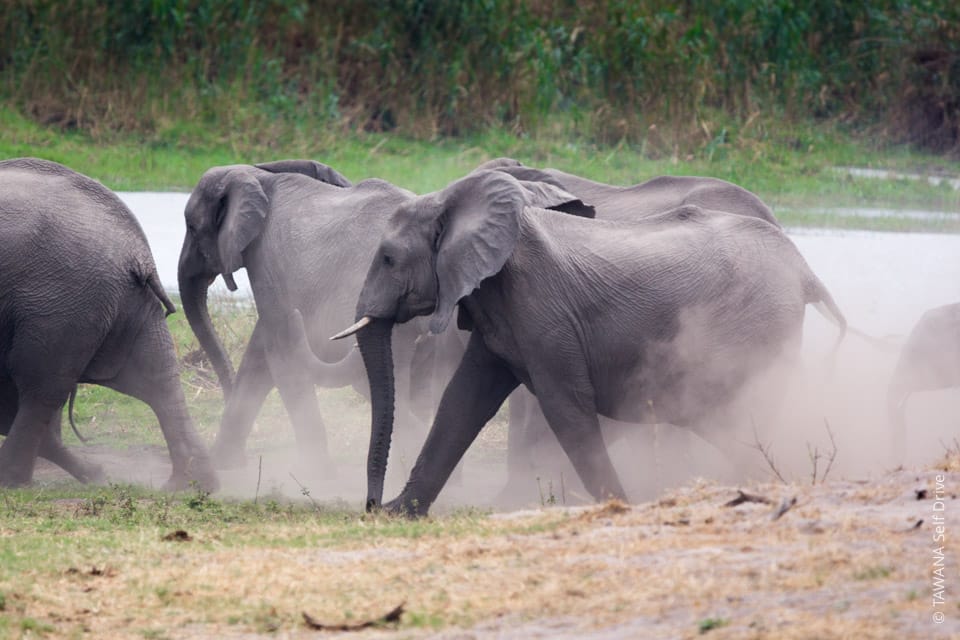
Mega herd of elephants are found between Mudumu and Linyanti
BWABWATA KWANDO CORE
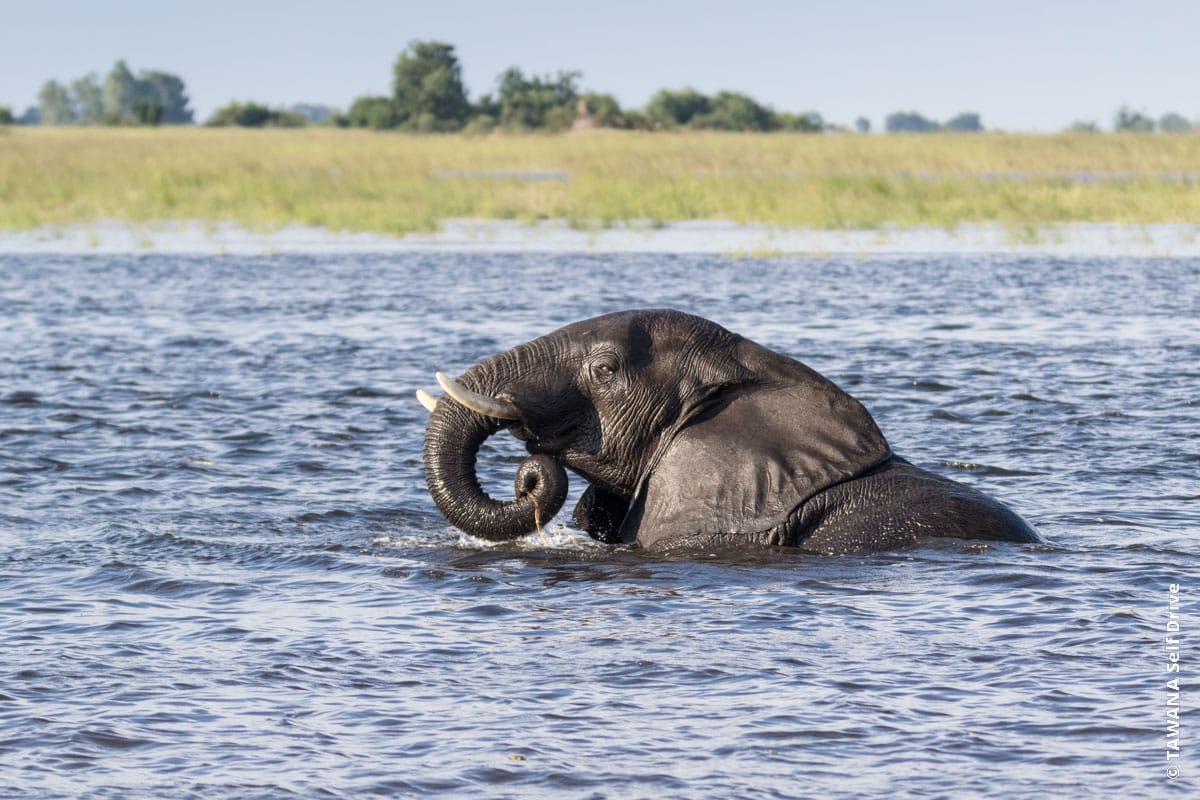
To the west of Kwando river, the susuwe triangle impresses with its diversity of wildlife and its magnificent views of typical wetland environment. As such, Horseshoes is a must. This Horseshoe-shaped lagoon attracts countless elephants who drink and bathe in the afternoon, offering a magnificent spectacle.
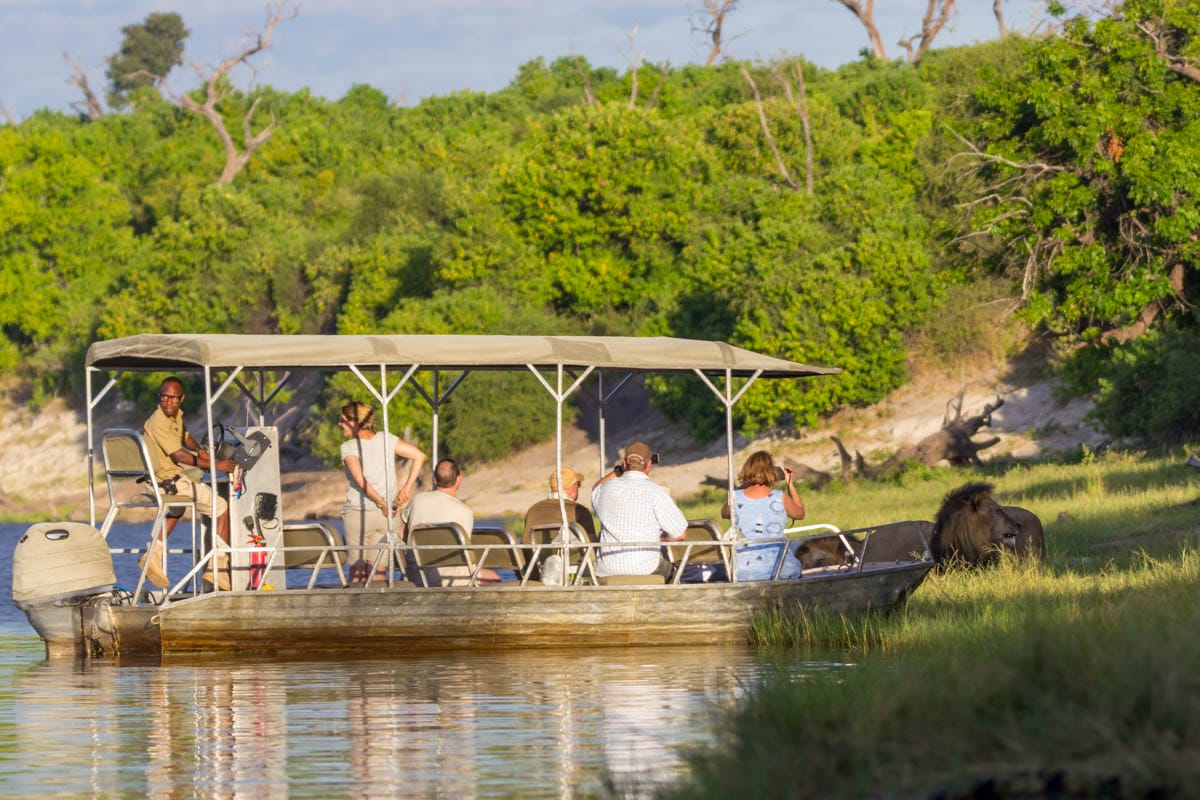
Kwando core is also a home to many herbivores, a myriad of birds, but also lions, leopards, cheetahs, wild dogs and hyena’s making this ecosystem particularly interesting to explore.
MUDUMU NATIONAL PARK
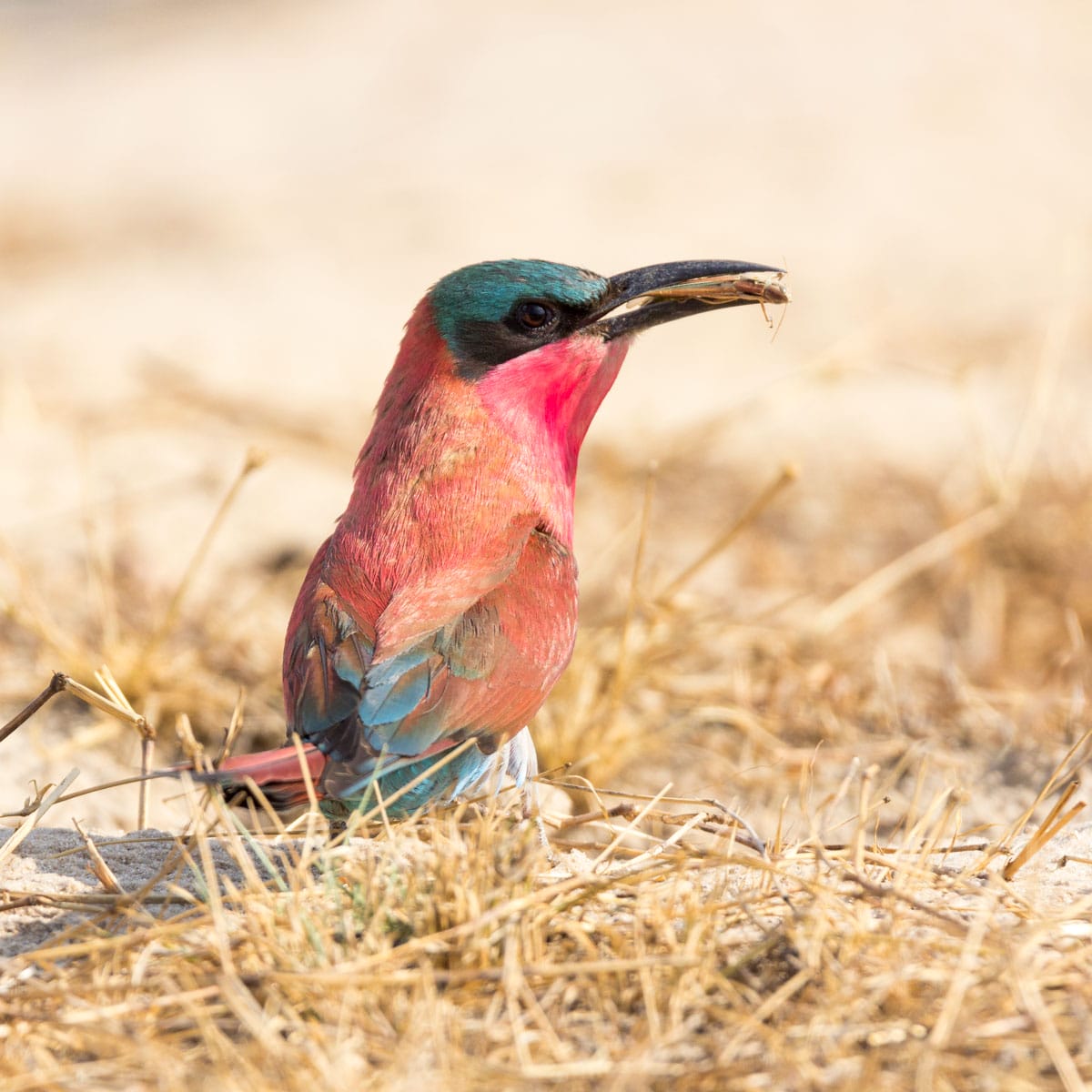
In Mudumu, the elephants dominate the wildlife, yet it is composed of a beautiful diversity of animals. Its plains and forests landscapes attract buffaloes, lions, leopards, giraffes,all kinds of antelopes including the rare sitatungas. The canals are home to hippos, crocodiles and otters. Mudumu is also paradise for birds with 430 listed species.
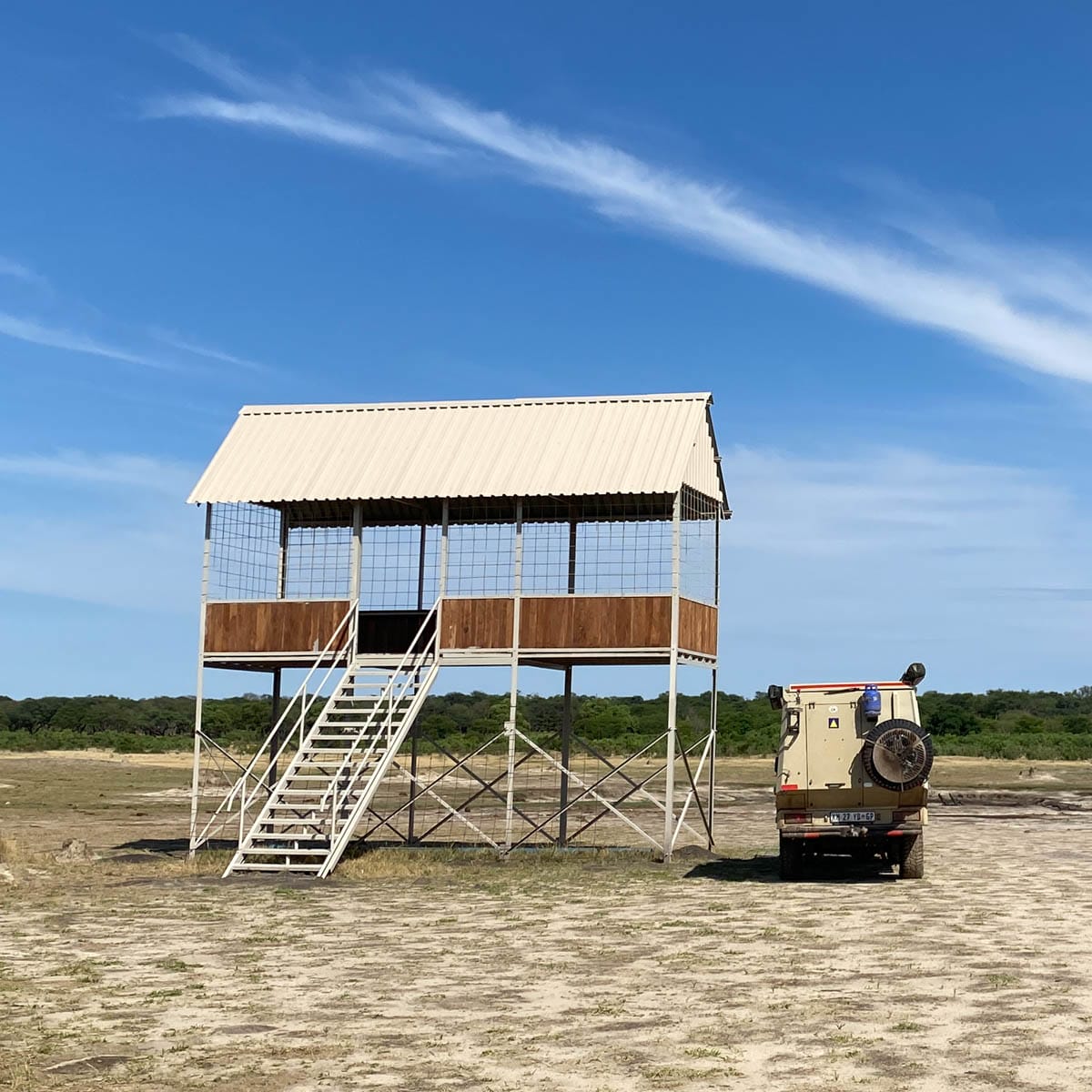
The observation of the elephants coming to drink is facilitated by a platform dominating the river.In winter, herds come and go all day long to this particular area that hippos, Lechwe cobes, and magnificent roan antelopes also like to frequent.
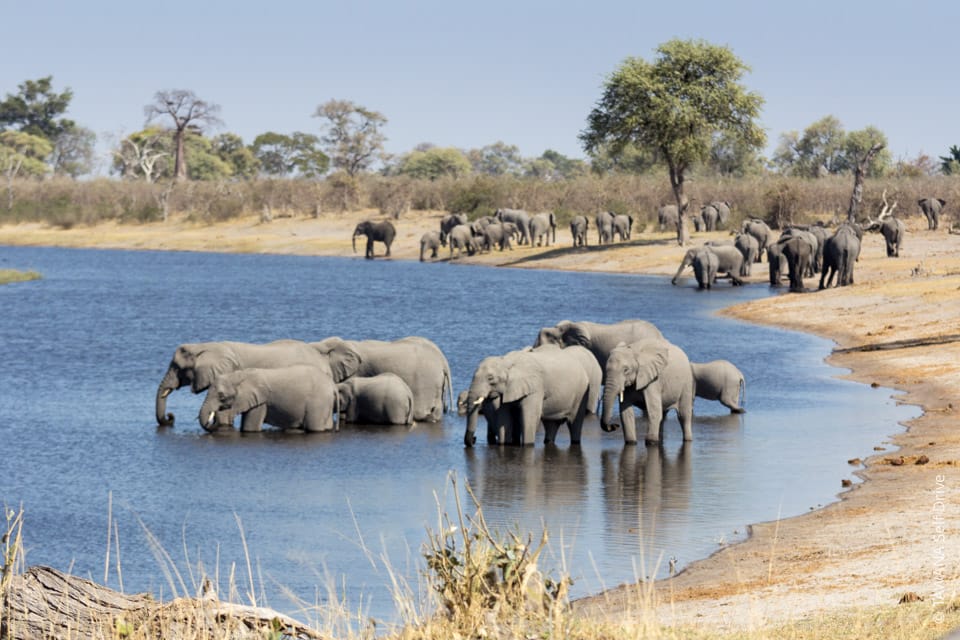
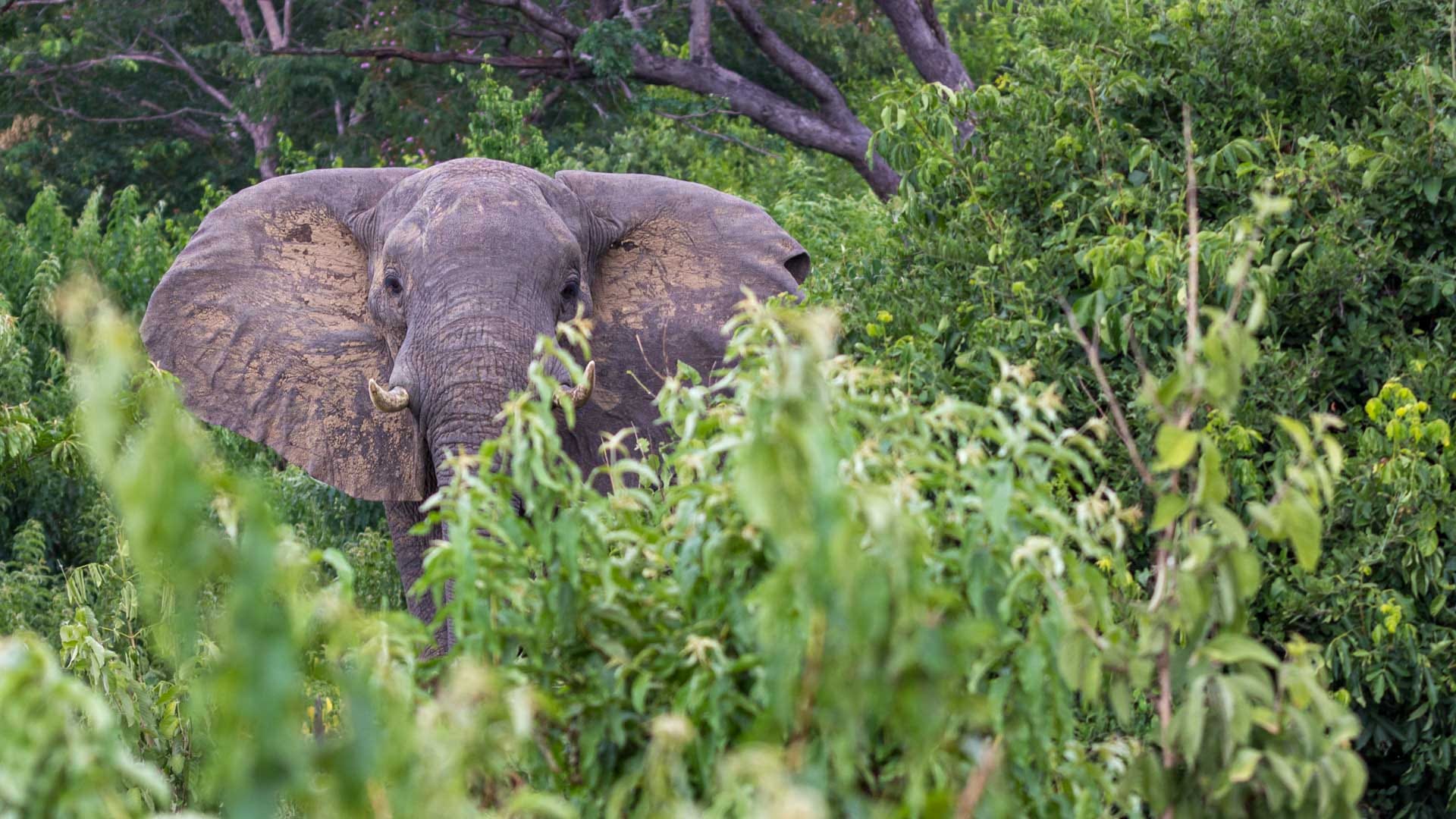
Elephants herd in Mudumu National Park
NKASA RUPARA NATIONAL PARK
The Nkasa Rupara park (formerly Mamili) runs east along the Linyanti river and west along the Kwando river, and plays a very important role in the eastern caprivian river ecosystem. The Kwando River is indeed connected to the Okavango Delta by the Selinda Canal and to the Zambezi River by the Linyanti-Chobe River. During the rainy season, Nkasa Rupara is so flat that 80% of the park is flooded by the river, leaving only 2 large wooded islands (Nkasa and Lupala). It then host an important wildlife under its magnificent jackalberry and sausage trees.
This sumptuous swamp is little visited by tourists and it is probably one of the best kept secrets in southern Africa. Here birds proliferate and there are lots of water dependent species such as the elephant, crocodile and hippo. More unexpectedly, Nkasa Rupara is home to a stable population of lions, who are very interested in the herds of buffaloes installed seasonally on the islands.
Facing the Linyanti region of Botswana, the elephants are naturally present in this park which is conveniently located on their migratory route to the north. It is possible to observe herds of several hundred individuals.
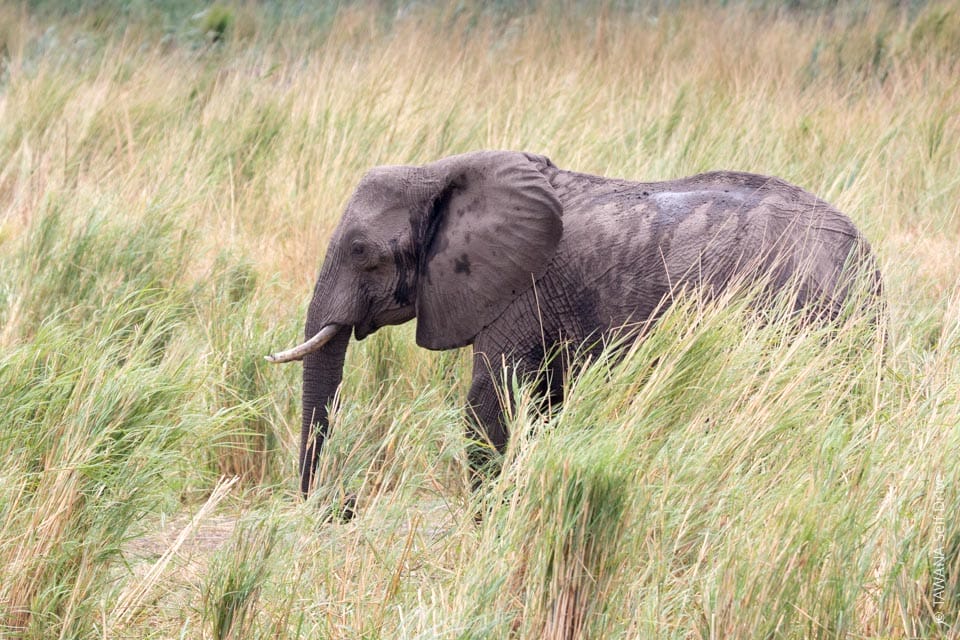
Elephant roaming the Nkasa Rupara marsh